That’s a Class? Six Unique Classes You Didn’t Know Auburn Offers

That’s a Class? Six Unique Classes You Didn’t Know Auburn Offers

That’s a Class? Six Unique Classes You Didn’t Know Auburn Offers

From safely shooting a gun to cooking an excellent meal, these unique and often overlooked classes in Auburn’s curriculum may surprise you.

By Meagan Arnold and Kaitlyn McCarthy

alt=""
There are over 150 majors to choose from that are held in the 12 colleges across Auburn University. This allows Auburn to offer a large assortment of classes that many students don’t know about. Of the more than 3,100 courses offered by Auburn each semester, this article highlights six of the most eclectic options available for students.
1. Ready to Roll—“Wheelchair Sports for Everyone”
When Robb Taylor isn’t coaching the Auburn or United States men’s wheelchair basketball teams, he is a teacher—even if he doesn’t see himself as one.

“The last thing I am is a teacher,” said Taylor about his class, PHED 2100: “Wheelchair Sports for Everyone.” “I keep telling the kids in my class, ‘don’t tell anyone about this class.’ Once it gets out, it’s going to get popular.”

The class focuses on creating an inclusive environment and introducing adapted sports to any student who is willing to step out of their comfort zone. Each semester Taylor teaches some of the basics of playing numerous adapted sports.

“I’m not getting them ready for a competition. I’m just getting them ready to push the chairs and have fun,” Taylor said. “It seems like as the semesters have gone on, students are coming in with more and more excitement for the class, which is awesome.”

Students first learn how to move, stop and turn in wheelchairs. Later in the semester, they learn how to apply those skills to different wheelchair sports including football, frisbee and tennis. The class also focuses on other paralympic sports such as blind soccer and goalball.

In lieu of a final exam, Taylor has students volunteer at the men’s wheelchair basketball tournaments. This lets students see one of the sports in action and gives the adapted sports program at Auburn more exposure.

“I want alumni to know how inclusive Auburn is in terms of the class offerings that they have. ‘Wheelchair Sports for Everyone’ is just a small snippet of the number of different classes that Auburn offers. And we’re just fortunate to be a small part of that.”

alt=""
2. Locked and Loaded—“Introduction to Pistol”
“I don’t know any other university anywhere that teaches a course like this,” Professor Todd Franks said about his gun skills and safety course.

Franks began teaching WILD 2410: “Introduction to Pistol” in the fall of 2022 and is looking forward to a fourth semester of instructing gun skills to students this spring, always placing a heavy emphasis on safety.

“This generation of students doesn’t have as many opportunities for uncles, grandparents or dads to introduce them to the shooting sports,” Franks said. His goal is to bridge that generational gap by providing students with a basic understanding of safety, marksmanship and entertainment throughout the course.

With a maximum of 12 students per section, each student is given one-on-one attention from one of the three instructors present. The class uses air pistols to begin and gradually works up to real .22 pistols in the last five weeks of the semester.

“I commend Auburn for letting me do something like this, because it is part of our world. And I would rather people know how to do something safely than go and buy a pistol, stick in their purse and not know what to do with it.”

“Introduction to Pistol” offers students the opportunity to learn to be responsible gun owners in a safe environment. The course is open to students of all majors, and Franks encourages students to register regardless of their skillset or knowledge level.

“It’s fun and it’s outdoors,” Franks said. “What better way to spend class time in the South?”

alt=""

3. Beneath the Blue—“Scuba 1”

PHED 1760: “Scuba 1” includes hands-on training for students not only to learn how to scuba dive, but also to get the opportunity to earn a certification in scuba diving. Any Auburn student regardless of major is invited to take “Scuba 1.”

“We take students from having zero experience to being totally certified,” Professor James Lloyd said. “If you’re interested in learning how to dive and can swim, we will take [you].”

“Scuba 1” provides students the opportunity to get real training and scuba experience in the Aquatics Center pool. It also offers lectures that cover the rules and regulations of scuba diving. At the end of the course students have the chance to earn their certification if they choose.

The class gives students the opportunity to travel all over the world, from Cozumel to Turks and Caicos. Students get the chance to test their skills in open tropical waters while also experiencing new cultures. If going abroad isn’t something that interests you, they even offer a trip right down the road to Lake Martin.

Lloyd has been teaching scuba at Auburn for 35 years and has been able to teach multiple generations of Auburn students, many who have recommended it to their kids years later.

Lloyd loves being able to witness students have unique experiences in the water. “One of my favorite things is seeing people experiencing things in the water for the first time. Like taking somebody to the Keys and they see a reef for the first time, or it’s the first time you see a shark. Stuff that gets people all jacked up.”

alt=""

4. Commanding Control—“Control Room Operations”

In JRSP 3510: “Control Room Operations”, Professor Andrew Young introduces students to the various roles and equipment associated with a live sports broadcast control room.

With about 20 students per class, students learn what happens during a multi-camera live production and gain exposure to all aspects of preparing for a live video production. This includes the basics of live operations crew positions and hands-on learning using real industry equipment and technology.

The course was first introduced into the Auburn curriculum in 2017 and continues to give students skills that make them stand out to future employers in the sports broadcasting industry.

“My favorite days are when my former students come back and talk to the current classes,” Young said. “It really gives current students a glimpse of what their future career can look like.”

The course falls under the recently added Sports Production major in the College of Liberal Arts, which prepares Auburn students for careers in the sports broadcasting industry. Many students who graduate from this program go on to work at major broadcasting companies like ESPN.

“When you are watching a live sporting event on TV, there is a good chance that an Auburn grad is working the crew,” Young said.

5. Radiant and Resilient—“Contemporary Topics in Women’s Health”

Offered through the College of Nursing, NURS 2350: “Contemporary Topics in Women’s Health”, taught by Professor Claire Thompson, is an elective open to students interested in exploring how a wide variety of health issues and other topics are affecting women in global society.

The class goes into depth on traditional topics like pregnancy and menopause, while also putting emphasis on more current issues like mental health in women, domestic violence, and women in the workplace.

While the class covers topics relating to women, men are encouraged to enroll if they are interested in these conversations. “We encourage any students who want to be better informed about issues that affect the health of women to take this course,” Thompson said.

The course goes beyond topics that solely relate to women, teaching students’ lessons on health insurance benefits and how to choose health insurance plans when they enter the workforce.

Thompson aims to bring light to issues that may unexpectedly affect women’s health. Students learn from nursing faculty and guest speakers with different areas of expertise from mental health counselors to a certified lactation consultant.

6. A Taste of Success—“Introduction to Culinary Arts”

HOSP 4970: “Introduction to Culinary Arts” is taught by Eric Rivera, Alabama Chef of the Year 2022. The course covers basic culinary techniques and skills, plate presentation and flavor pairing.

“Each semester I am flooded with emails from students interested in taking our culinary courses, however, until now, we could not offer them a course,” said Auburn’s Culinary Science program coordinator Mark Traynor, who has a doctorate in Culinary Arts and Science.

This new, three-credit hour class is wrapping up its first semester and has been a huge hit with students. The course holds up to 16 students who currently represent 14 different majors on Auburn’s campus.

Rivera finds joy in the first class of each semester. “The students seem so energized that they made it through their first lab,” said Rivera. The hands-on class is full of excitement and eagerness from students week after week.

Students are exposed to a wide array of ingredients and skills to cook them to create a delicious and appealing dish. “I enjoy seeing the creativity and collaboration that the students put into their final dish each week at the daily plate-up,” Rivera said.

“’Introduction to Culinary Arts’ is open to any and all students who want to learn some basics and some advanced cooking techniques and expand their current culinary skills,” Traynor said.

alt=""
“Where can I sign up?”

To find these classes, along with many others that were not mentioned, look through the Auburn University course catalogue. There are many classes that could surprise you and offer a unique learning experience.

Did you take any fun or crazy courses during your time at Auburn? We want to hear from you! Share your favorite class experiences here.

All Hail the Queen

All Hail the Queen

Auburn’s new Bee Center is a sweet deal for fans of the world’s busiest insects.

Dressed to Impress

Dressed to Impress

How the Campus Career Closet is helping Auburn students dress their professional best.

The Life of George McMillan ’66

The Life of George McMillan ’66

From student government president to lieutenant governor and music festival empresario, George McMillan’s life of public service had an outsized impact on the state of Alabama.

An Eye for Action

An Eye for Action

From the mound to the mountain, Blake Gordon ’03 has captured life on the edge.

Charting Her Course

Charting Her Course

From Auburn’s campus to the world’s most advanced warships, Emily Curran ’10 has never forgotten where she found her footing.


Alumna Furnishes Homes for Homeless

Alumna Furnishes Homes for Homeless

Alumna Furnishes Homes for Homeless

A former nurse helps Michigan’s homeless create a new beginning, one piece of furniture at a time.

 By Derek Herscovici ’14 

A woman in business attire leans against a brick wall.

She walks through aisles piled with furniture, looking for the one piece that will tie the room together. Couches, kitchen tables, beds—they symbolize more than just a kitchen or a living room. They are a new beginning. A second chance. For people escaping poverty and homelessness, they are pieces of a life only dreamt of.

Ruth Ann Stewart Logue ’87 wants everything to look just right when the new owner sees it for the first time. Her nonprofit House N2 Home has furnished hundreds of residences for Michigan’s formerly homeless, helping to make a life of limited means a little easier.

“I loved it from the beginning, that’s the truth,” said Logue, the founder and volunteer CEO of House N2 Home. “I’ve learned so much about what it means to live in poverty and how for so many of our clients, there was just a tipping point—a death in the family, a severe illness, being kicked out of the house for being gay. Our clients do not have safety nets. When I realized we could provide one so they could work on the things they need to be stable, I was completely hooked.”

In 2017, she was browsing the listings of the “Freecycle Network™,” an online newsletter where people give away reusable goods. She often ignored the daily emails, but an entry that day stood out. “Single mother of three. I need everything.” The former maternity nurse and mother of six felt compelled to learn more.

Domestic violence had forced the woman and her children from one home. A family tragedy had forced them from another. With nothing left and nowhere to go, she turned to the community for help.

Logue contacted the woman and helped her get into one of Ann Arbor’s many homeless shelters, then found a landlord who would rent to her. But she didn’t stop there.

“I gathered a group of friends around this and said, ‘This woman is moving out of the shelter. She had been homeless as a young person, remembered coming out of a shelter and never having furniture, so [her house] never felt like home.’ I was determined that this was going to be a different story for her and for her children. I want her kids to come home to beds and furniture—I want them to ‘come home’ to a home.”

It’s a labor of love.

Logue and her friends found furniture for the house, stocked the fridge, prepared dinner and threw a welcome party for the grateful family. Job well done. End of story. Ten months later, the aforementioned landlord called to say he was renting to two more single moms leaving a shelter. Could she help them too?

The requests kept coming. In 2019 they organized as House N2 Home and since then have furnished more than 800 units for families and individuals, including almost 300 in 2022 alone. The Ann Arbor community has taken notice.

All of House N2 Home’s furniture is acquired through donations from University of Michigan students and the surrounding community, saving untold tons from the landfill. It’s stored in a 20,000-square-foot wing of Trinity Health-Saint Joseph’s Hospital for just $2 a year—a critical boost for a nonprofit that generates no income but plenty of expenses.

Moving the furniture alone costs about $500 a home, but then there are specific expenses—like the $25 zippered casements for gently used mattresses—that add up over time. After donating 500 beds in 2022, that worked out to $12,500.

Logue or a member of the House N2 Home team meets with new clients who are transitioning out of homelessness after they’re referred by a case worker. Once long-term housing is secured, Logue interviews them to determine both “needs” and “wants.” Many have never been asked for input on their new homes, and they don’t forget it.

One client said he preferred the colors blue and white, that they made him feel more restful. When he saw the white sofa with blue pillows and a blue ottoman in his home, he gratefully told her, “you heard me.”

Logue credits her past as a nurse for how she works with clients now.

“Nursing prepares you for so many things—you have to multitask, to solve problems—and you have to care. You can’t just go into it for the science of it, you have to care about people,” said Logue. “Nurses don’t get rattled by health-related issues, either.”

It’s a labor of love—the 50,000-plus service hours from more than 100 volunteers are a testament to that. But when the client steps into their newly furnished home for the first time, it’s overwhelming. For everyone.

“You really feel like you’re living in service to someone else, and I think that’s honestly one of the healthiest things we can do as people,” said Logue. “It’s been really life changing to see that, and especially for them too. I’m not sure whose life has been changed more.”

The Life of George McMillan ’66

The Life of George McMillan ’66

From student government president to lieutenant governor and music festival empresario, George McMillan’s life of public service had an outsized impact on the state of Alabama.

An Eye for Action

An Eye for Action

From the mound to the mountain, Blake Gordon ’03 has captured life on the edge.

Charting Her Course

Charting Her Course

From Auburn’s campus to the world’s most advanced warships, Emily Curran ’10 has never forgotten where she found her footing.

The Life of George McMillan ’66

The Life of George McMillan ’66

From student government president to lieutenant governor and music festival empresario, George McMillan’s life of public service had an outsized impact on the state of Alabama.

An Eye for Action

An Eye for Action

From the mound to the mountain, Blake Gordon ’03 has captured life on the edge.

Charting Her Course

Charting Her Course

From Auburn’s campus to the world’s most advanced warships, Emily Curran ’10 has never forgotten where she found her footing.

An Experiment That Had to Work

An Experiment That Had to Work

An Experiment That Had to Work

2019 marks the 50-year anniversary of the integration of Auburn University athletics. History-makers, then and now, tell their stories of leveling the playing field on the Plains.

By Jeff Shearer

Collage of different athletes playing their sport

Always on a Stage

When Henry Harris debuted for Auburn’s varsity men’s basketball team on Dec. 1, 1969, more than 22 years had passed since Jackie Robinson integrated Major League Baseball.

Harris enrolled at Auburn a year earlier, playing for the freshman team in 1968-69, when the NCAA prevented freshmen from playing varsity basketball and football, a rule that changed in 1972.

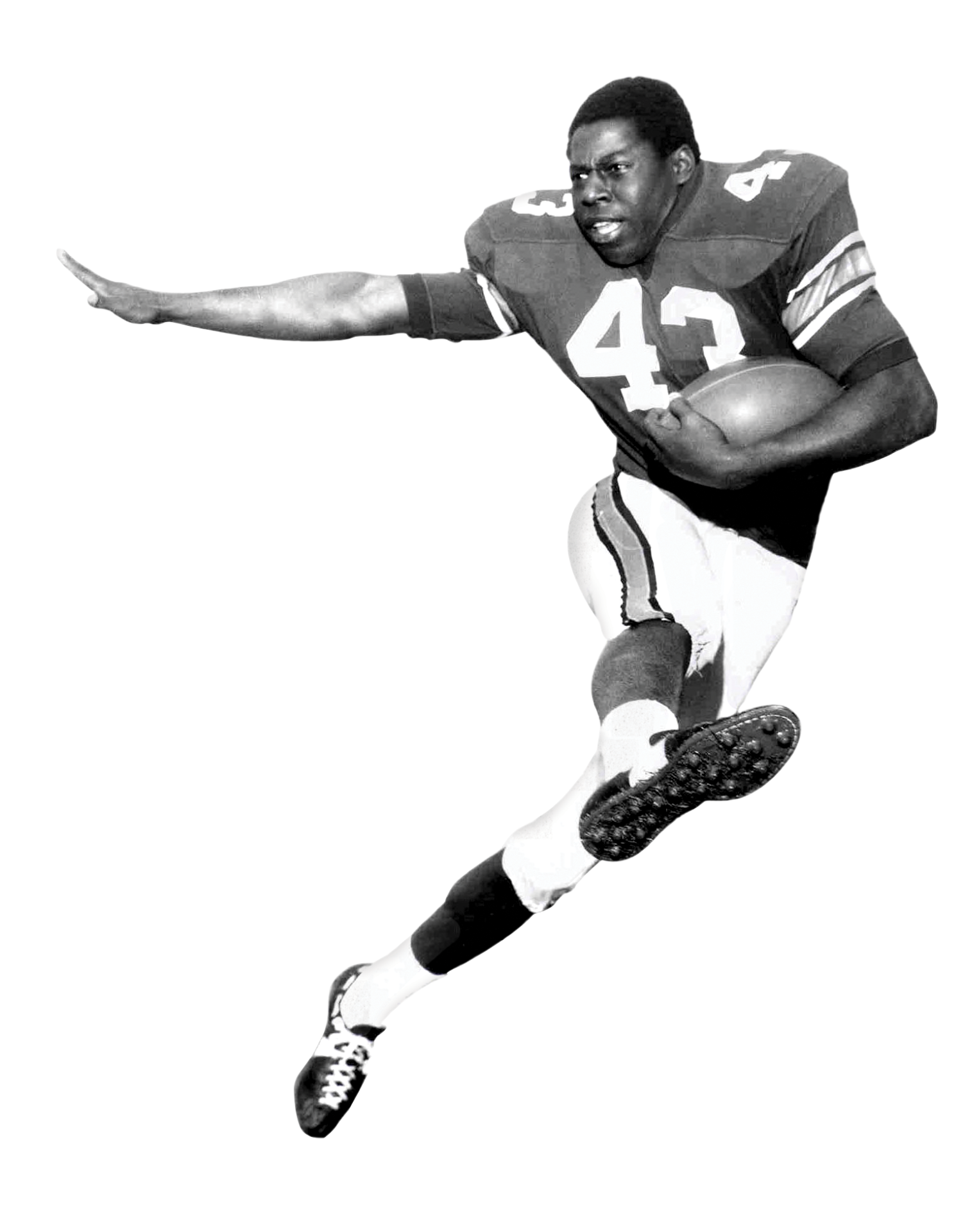
James Owens arrived in 1969, Auburn’s first black scholarship football player, and the first at a major state school in Alabama, Mississippi or South Carolina. Like Harris a year earlier, Owens played for the freshman team before making his varsity premiere in 1970.

Two months before he passed away in 2016, Owens recalled his history-making debut. At the time, the southwest corner of Jordan-Hare Stadium, where the press box and locker room are now located, contained wooden bleachers where African-American university employees and fans sat, a vestige of the segregation that was still a way of life in many parts of the South.

“Those black people cheered and hollered,” Owens said. “I was their hero, and they were my heroes. I realized I was there for more than James Owens. I was there for a nation and people were depending on me to succeed.”

“I was their hero, and they were my heroes.”


Growing up in Birmingham, Ala. in the 1960s, Owens remembered the struggle for civil rights. The marches, the dogs, the firehoses. One year before Owens enrolled at Auburn, Dr. Martin Luther King, Jr. was assassinated.

“With what Martin Luther King sacrificed, he helped many people stand and be courageous,” Owens said. “If he gave his all, why couldn’t we?”

So James Owens endured the challenges that came with being a pioneer.

“When my parents dropped me off at Auburn, I realized I was here all by myself,” he said. “When my teammates left the field, they were going home. I was never home. I was always on a stage.”

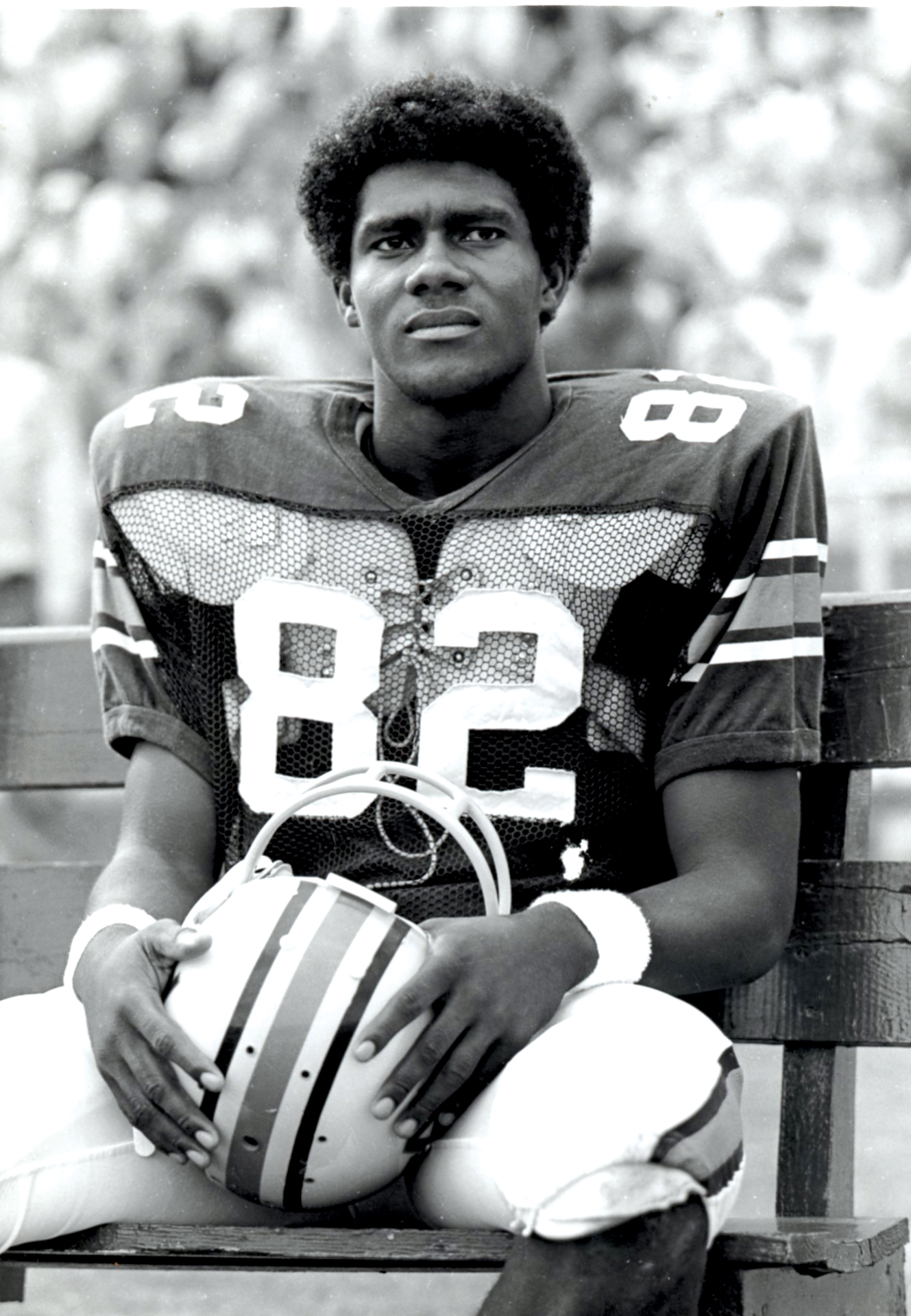
Thom Gossom walked on at Auburn in 1971, earning a football scholarship and joining Harris and Owens, whom teammates called “Big O.”

In 1975, Gossom became Auburn’s first black student-athlete to graduate. His 2008 memoir, “Walk-On: My Reluctant Journey to Integration at Auburn University,” chronicles Gossom’s pioneering role.

As a teenager in Birmingham, watching Coach Shug Jordan recap each game on the “Auburn Football Review,” Gossom told his father he intended to make history.

“I said ‘I’m going to be the first,’” Gossom recalled. “I said, ‘Somebody’s got to do it, so I’ll do it.’”

Like Owens, Gossom realized his contribution to Auburn University would be measured by more than his career statistics of 36 receptions and seven touchdowns.

“We were so isolated,” he said. “It was so lonely. You knew that this was not just for you. This was for other people. This was for Bo [Jackson] and Charles [Barkley], and the guys out there now, so that we could open those doors for them. It was an experiment that had to work.”

An actor and writer, Gossom in 2008 chaired the Auburn University Foundation Board’s “Because This is Auburn” campaign, helping raise more than a billion dollars for his alma mater. In March 2019, Gossom received Auburn Alumni Association’s Lifetime Achievement Award.

James Owens blocking a tackle while running the ball
James Owens
Black and white photo of Job Gossam in his football jersey
John Gossam
History on the Sidelines

At the same time Owens and Gossom were making history on the field, Linwood Moore was making history on the sideline.

Drawing on his experience as a high school senior in 1970-71, during the integration of Central High in Phenix City, Ala., Moore embraced new opportunities at Auburn, becoming Auburn’s first African-American cheerleader. Moore tried out three times before making the squad in 1974-75.

“Throughout the South, not just in Alabama, massive desegregation was happening everywhere,” said Moore, who served as vice president of his high school senior class.

In desegregated Central High School, all students were involved in all campus activities, Moore said. But for African-Americans, Auburn was not a place to come for social interaction. Only education.

“I thought it was something I could do,” Moore said. “And since my history in high school had been about reconciliation and integration, I thought I might have an opportunity to break a barrier here as well.”

White and African-American athletes successfully competing together did more than break the color barrier in sports—it was enlightening for the fans who had fought against it, too, said Auburn Professor of Journalism John Carvalho ’78.

“The courage of these athletes to step on the athletic field can’t be minimized,” said Carvalho. “It’s hard to believe that just a few years before, high school and college athletics in the South were segregated, sometimes by law.”

Attending Auburn on an Army ROTC scholarship, Moore graduated from pharmacy school in 1977, enjoying a decorated military career before serving as acting chief of pharmacy for the Department of Veterans Affairs. A resident of the Washington, D.C. metro area, Moore still cheers for Auburn, sometimes from a distance, but often in person.

“I come here all the time, whenever I’m home visiting family,” Moore said. “I’m pleased at the number of African-American students on campus now. It’s really grown tremendously, and the level of involvement has increased. Auburn set me on my path, in terms of career. I have no bitter memories or experiences; I just love Auburn.”

“The courage of these athletes to step on the athletic field can’t be minimized.”


Harvey Glance ’91 wrote his name in Auburn’s record books, winning national championships in track and field and an Olympic gold medal in 1976. At the same time, Wendell Merritt ’82 became Auburn’s first African-American women’s student-athlete when she played basketball for the Tigers from 1977-80. In 1992, Glance made history again, becoming Auburn’s first African-American head coach.

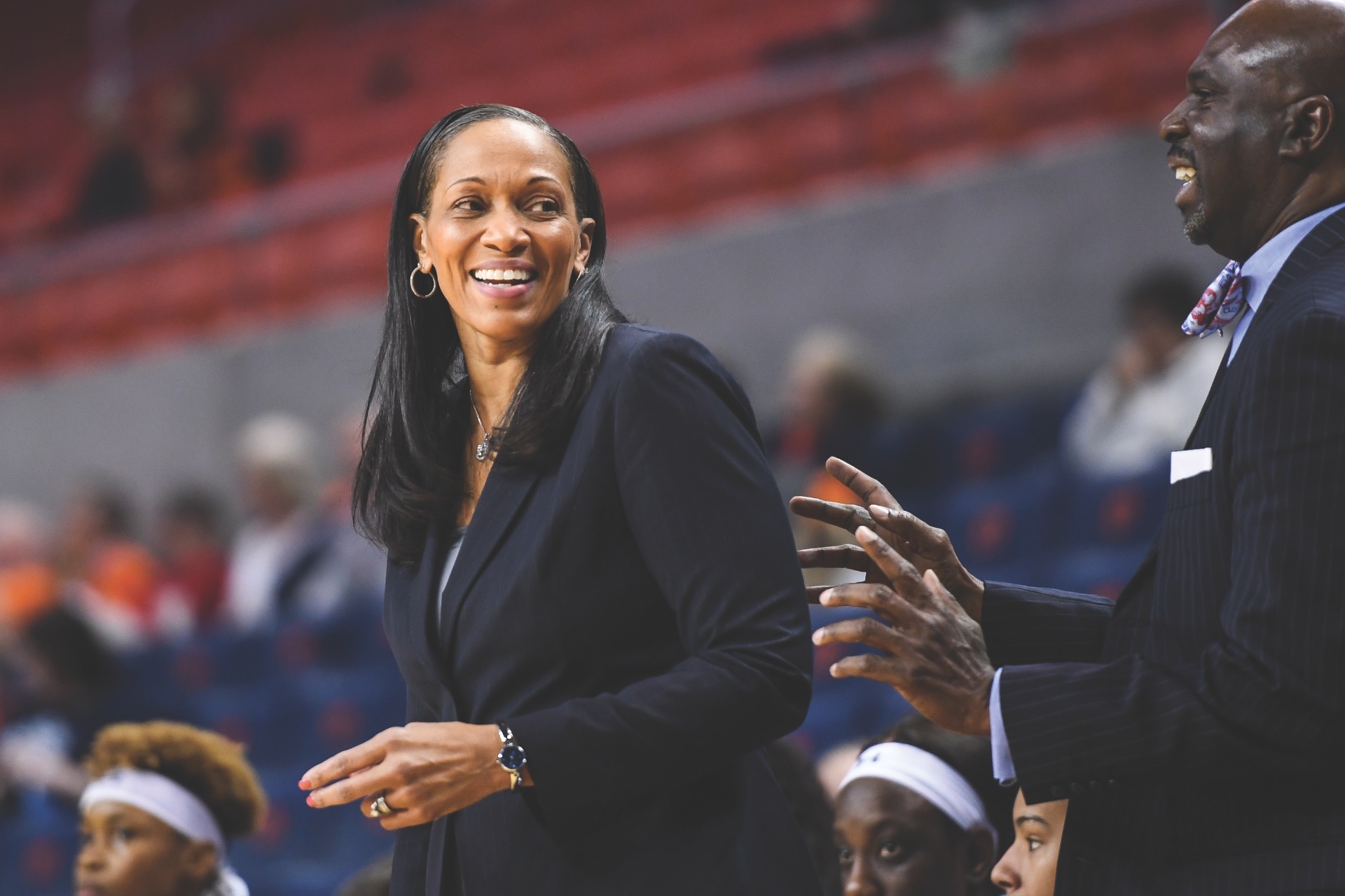
Twenty years later, in 2012, Terri Williams-Flournoy became the first African-American woman to be a head coach at Auburn, just as she had done eight years earlier at Georgetown University.

“When you are first doing it, you don’t think about it,” said Williams-Flournoy. “You just see it as your first head coaching job. After a while you realize, ‘Oh, wow, there is no one who looks like me who has ever coached here before.’ Then you just feel good about yourself, because you’re now a role model for every black female that wants to be a head coach at an institution, or university that has never had one before. It’s possible and it can happen.”

Williams-Flournoy believes that she has an obligation to not only teach her players basketball, but to coach the next generation through life.

“Why not teach them something great along the way?” said Williams-Flournoy. “Here at Auburn, we started teaching on how to be an excellent person. Do something for someone else. It’s not about you. Someone did the exact same thing for me, so I have to do it.”

Current Auburn football defensive lineman Derrick Brown says these racial pioneers helped everyone who came to campus after them.

“It’s such a tremendous thing,” said Brown, who is also the president of Auburn’s Student-Athlete Advisory Committee. “They led the way. Without the barriers they broke through, we’d never be able to have the opportunity that we have here at Auburn.”

Coach Terri Williams-Flournoy smiling while standing next to man on basketball court
Coach Terri Williams-Flournoy
Leadership at the Top
Fifty years after Henry Harris scored six points against South Carolina in his first varsity game, African-Americans serve in positions of leadership throughout Auburn’s Athletics Department, including at the top.

Allen Greene, Auburn’s first African-American director of athletics — the third in Southeastern Conference history — shares a similar passion to invest in others who want to emulate his career path.

“I’m very, very fortunate to be at Auburn University,” Greene said. “This is a very high-profile job at a very high-level institution in the highest-profile conference.”

After working at Notre Dame, his alma mater, in compliance and development, Greene headed south to the University of Mississippi as a development officer. Some of the donors on whom Greene called had attended Ole Miss a half-century earlier, when segregation was the status quo in the South.

“It didn’t dawn on me that I was developing relationships and friendships with some people who were supportive of segregation in the ’50s and ’60s,” he said.

Watching ESPN’s documentary, “Ghosts of Ole Miss,” about the university’s integration in 1962 against the backdrop of an undefeated football season, Greene noted how his new friends’ viewpoints on race had changed.

“I started thinking, ‘That’s really interesting.’ At 18, 19, 20, 21 years old, they did not agree with going to school with people of color,” he said. “Fast forward 50 years — many of their mindsets have evolved to, ‘Why were we thinking that? Regardless of skin color, we’re brothers.’ That has sat with me for the past eight years.”

Greene still maintains friendships with those Ole Miss graduates from the 1960s and takes comfort knowing that people can change. For that reason, he insists on not abandoning people, but looking for ways to build on shared connections.

After interviewing with former Auburn University President Steven Leath and the search committee, Greene accepted the Auburn AD job early in 2018, before his first campus visit.

“The discussion was more about trying to figure out if I will be accepted because my profile is so nontraditional for Auburn. I’m black. I’m from the North and I didn’t go to Auburn,” he said. “Will people accept me for that?

But Greene says that all Auburn people are united by their common beliefs, regardless of your background or skin color.

“I’m not referring to political or religious beliefs, but human value beliefs. We can have our differences on a lot of those surface things, but at the core of who we are as people, I felt at home with members of the Auburn Family before I even got to Auburn,” said Greene. “I knew if even half of the people were like the folks I visited with during the interview process, it would be a life-changing experience for the positive.”

Greene’s first year on the Plains, which ended Feb. 2019, validated that confidence.

When Greene has time to return frequent phone calls from aspiring administrators, one piece of advice he gives stems from his personal journey: don’t let demographic differences or perceived cultural differences prevent you from pursuing opportunities, even in regions with a history of oppression toward people of color.

“I want people to know that Auburn is inclusive,” he said. “For those who haven’t been to Auburn, I encourage them to experience The Loveliest Village on the Plains for themselves.”

“I want people to know that Auburn is inclusive. For those who haven’t been to Auburn, I encourage them to experience The Loveliest Village on the Plains for themselves.”

Living the Legacy

Fifty years after he arrived at Auburn, even after his death, James Owens continues to inspire.

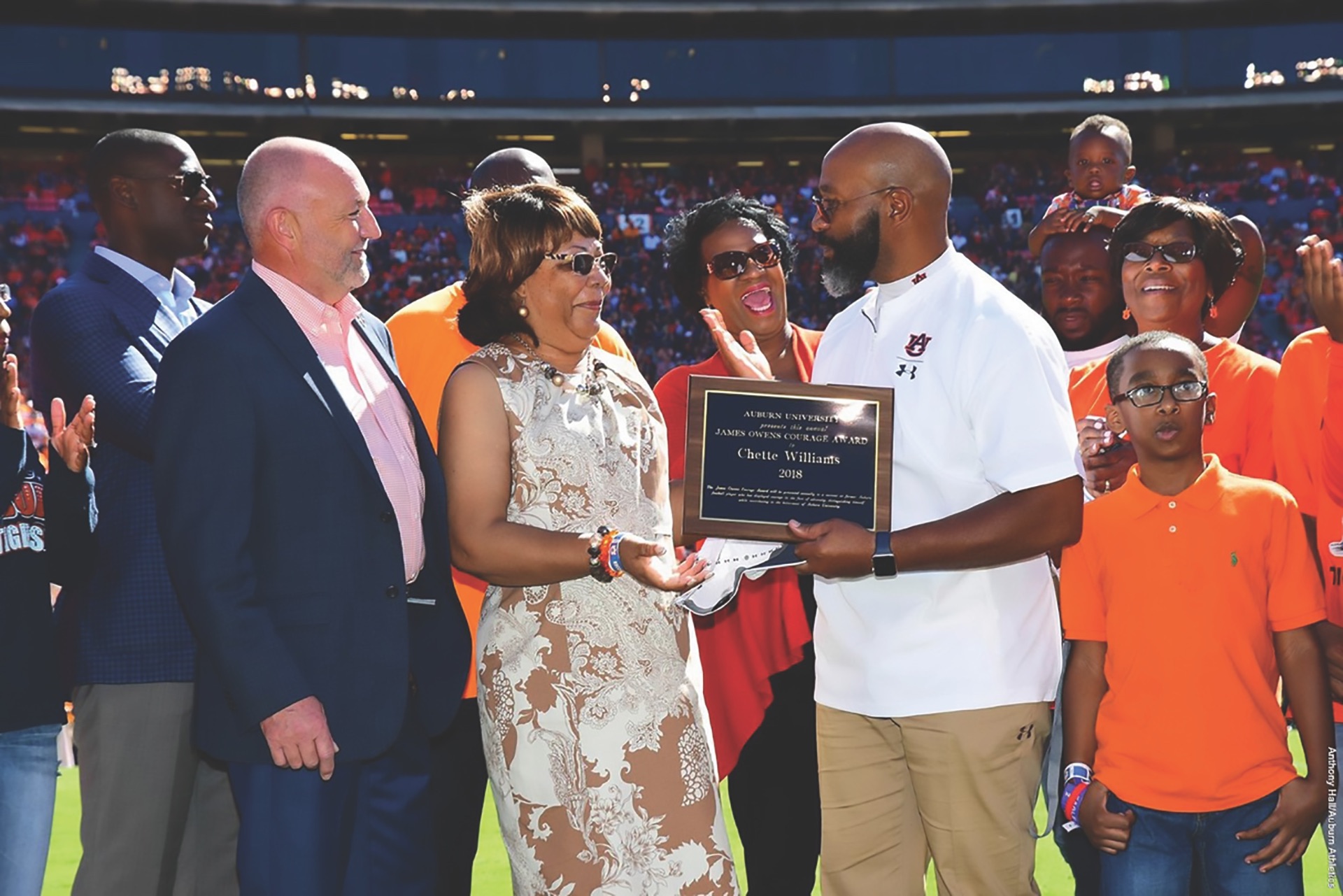
In 2012, Auburn presented the first James Owens Courage Award to its namesake, an honor bestowed to an Auburn football player who has displayed courage in the face of adversity. Last fall, Rev. Chette Williams ’86, Auburn football’s chaplain for the past 20 years, received the award.

“It’s quite an honor for me because I knew James a long time,” Williams said. “When I played football at Auburn,
James was a graduate assistant for a couple years.”

When Williams entered the ministry, Owens, a pastor himself, mentored him.

“I’m so appreciative of the Owens family for considering me as a recipient of this award,” Williams said. “James Owens modeled for all of us courage and faith in the face of life’s challenges.”

Chette Williams ’86 receiving the 2018 James Owens Courage Award
on the field of Jordan-Hare Stadium.

 As his health declined, Owens appreciated the outpouring of support he received from Auburn people.

“The prayers, the letters, to know people care,” he said. “It’s one of the greatest feelings to know you are loved by your family.”

In the 50 years since Henry Harris and James Owens integrated Auburn’s men’s basketball and football teams, their quiet courage opened doors for thousands of African-American student-athletes who have followed.

Auburn senior Kam Martin (far left) plays the same position, running back, as James Owens.

“When Coach Malzahn addresses the team, we talk about ‘riding for the brand,’” Martin said. “We do it for everyone who played before us. We do it for Auburn. We do it for people like Mr. Owens, who opened the doors for everyone.”

“I’m very proud that they were able to pave the way for athletes like us who have come behind them,” said Anfernee McLemore, (right) who helped lead Auburn’s men’s basketball team to its first Final Four last season. “They set the foundation. By how they carried themselves, they set the stage for how we’re perceived on campus and I’m grateful.

“We’re holding that same standard. We want to carry ourselves in a way that provides respect for the next generation of Auburn student-athletes.”

Higher Ed, Higher Calling

Higher Ed, Higher Calling

Sydney Freeman Jr.’s love of people led him to a prestigious U.N. fellowship and a life dedicated to helping others.

The Life of George McMillan ’66

The Life of George McMillan ’66

From student government president to lieutenant governor and music festival empresario, George McMillan’s life of public service had an outsized impact on the state of Alabama.

An Eye for Action

An Eye for Action

From the mound to the mountain, Blake Gordon ’03 has captured life on the edge.

Charting Her Course

Charting Her Course

From Auburn’s campus to the world’s most advanced warships, Emily Curran ’10 has never forgotten where she found her footing.